I Wrote a Game
Some time (years?) ago, I started writing an OSR-inspired ruleset to use at my table with a simple idea in mind: I wanted to use Tarot cards in lieu of dice.
Suddenly, His Majesty the Worm came out!
I haven't played it, but I've read it (and reread it) and what can I say that everyone hasn't yet? It looks great! Joshua McCrowell did many, many things right with it and I have endlessly mined it for inspiration since the first reading. However, it did not quite land close to where I had envisioned a tarot-esque TTRPG should. Moreover, it went against the tone of the game I had been working on – I've GM'd the murderhobo, mudcore, amoral games that HMtW (and most rules) seem to push you towards, and I yearned for something else, something outside of the darkness of the dungeon.
So I wrote it and finally played it. It's called Peregrine, because it's (also) about traveling and, in some ways, about birds. The title comes from the J. A. Baker nature-writing classic.
Some features:
- a GLOG-inspired system;
- Tarot card-based resolution system;
- 21 Signs (i.e. classes), one for each Major Arcana;
- four Virtues – Might, Mind, Grace, Weird – and its four Traits – Vigour, Stealth, Courtesy, and Hope;
- robust rules for traveling, cooking, conversational etiquette, and singing together;
- slot-based inventory systems and three (!) inventories to manage: Physical, Mental, and Soul;
- heavily geared against combat, which can be quite swingy;
- rules for spending a cozy Winter away from adventures.
I started this blog to share its rules but also to give me the extra push I need to finish it: it exists, as of now, in the primordial soup of the Ur-Rules Binder. It's also being play-tested by my kind friends, whose exploits I might also record here.

The main guidelines of what I wanted to achieve with Peregrine:
I. The game uses tarot cards instead of dice.
Therefore it should use tarot cards instead of dice.
Cards have interesting properties as game objects, some of which are in full display in McCrowell's work: where there's a discard pile, for instance, savvy players can learn to count cards. Cards possess a natural “push-your-luck” element: if you draw well now, the odds that you draw poorly increase; if you avoid an enemy now, that only means they’re getting closer.
HMtW set an incredible baseline for other card-based N/OSR systems. Yet, aside from this and other similar elements (cards in hand, etc.), cards in HMtW are little more than another way to randomly generate numbers. Something valuable is lost here, especially if we're using Tarot cards. Traditionally, Tarot spreads take into account the physicality, the thingness, of the cards: it matters if they are close or far-away, if they are upside down or not, and so on... I wanted the cards to matter, and the pictures in the cards to matter too. If we're doing Tarot, let's do it for a little more than "it looks cool" (which it does).
So,
Peregrine demands a specific Tarot deck: the Marseille deck. It's evocative and full of interesting little properties I hope to explore in later posts. The game can be played with other decks, but some rules might become imbalanced – did you know that the face-cards in the Minor Arcana are evenly split between left- and right-looking?
I crammed as many different card games and interactions as I could into the game and its many procedures: trick-taking for negotiations, memory games for hunts, poker for cooking, and unique spreads for everything else! Thankfully, it's not as tricky as I feared, that is, the rules did not implode during play-testing. I'll share these systems and procedures in subsequent posts.
Here's an example, one ability for characters Born Under the Sign of XVII. The Star:
- Hunter You can track people and beasts. When a Spoor is drawn on the Travel Event table, you may choose to follow their tracks. Draw 9 cards from the Minor Deck and arrange them in a 3x3 square in front of you. At the beginning of each phase, you may reveal any two cards – if the suits match, discard them. Treat The Fool as a wildcard. You may do this any number of times per phase equal to the number of templates you have in this Sign. The suit and value of the last remaining card dictates how you find your prey.
| Suit & Value | Your prey is... |
|---|---|
| Swords (1-7) | Fighting, about to kill prey. |
| Swords (8-14) | Feeding after fresh kill. |
| Pentacles (1-7) | Absent. You find only its lair. |
| Pentacles (8-14) | Asleep in its lair. |
| Cups (1-7) | Bloodied and hurt, struggling against another creature. |
| Cups (8-14) | Bloodied and hurt after killing another creature. |
| Wands (1-7) | Eerily absent... A noise behind you – draw for Readiness! |
| Wands (8-14) | Dead or badly wounded. Whatever did it is close... |
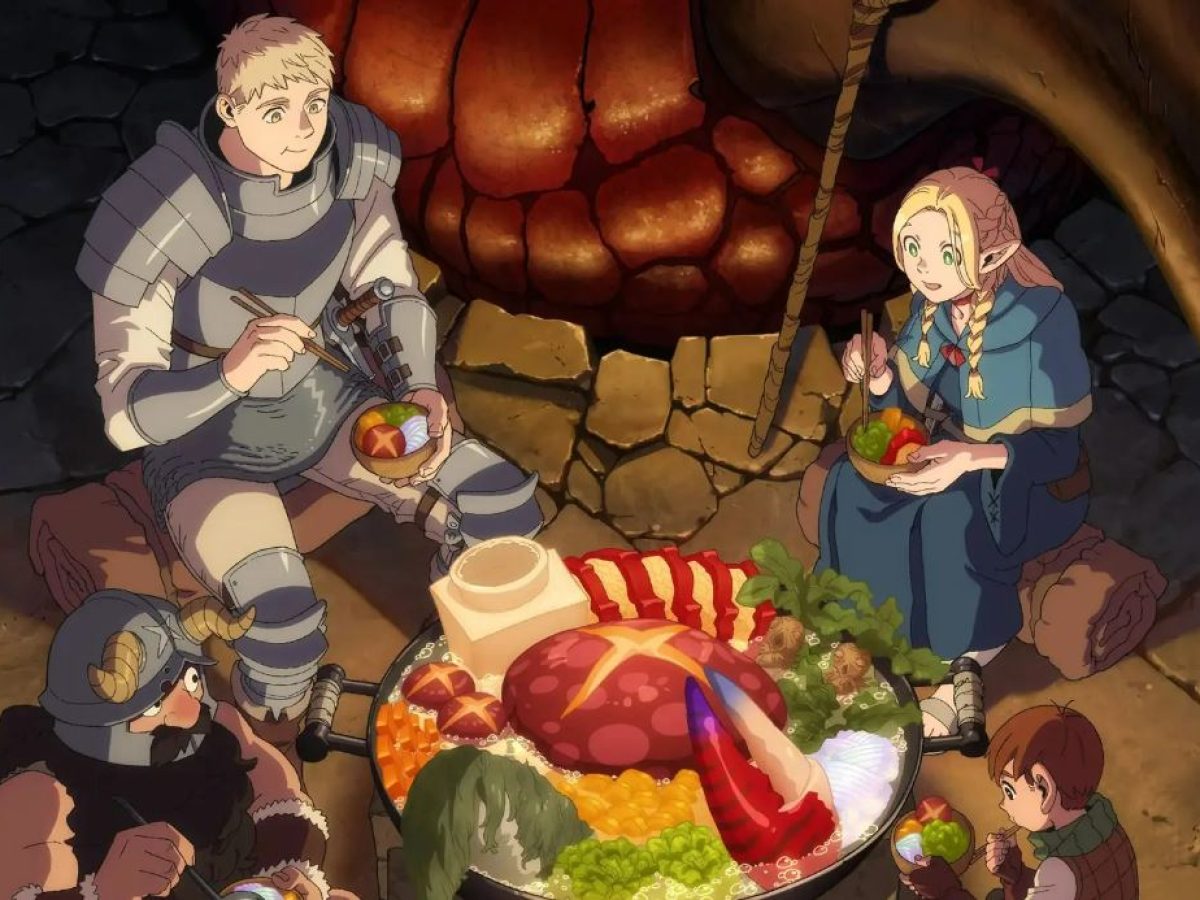
II. A Game About Food, Friendship, and Traveling
His house was perfect whether you liked food, or sleep, or work, or story-telling, or singing, or just sitting and thinking best, nor a pleasant mixture of them all. Evil things did not come into that valley. – The Hobbit
The three core themes of the game – there's no XP for combat or treasure.
You gain XP by succeeding reaction rolls, by raising faction relationship scores, and by cooking for strangers. There's a nice gameplay loop to this: by traveling, you acquire new and interesting food and meet new people; you need food to travel but also to share with strangers; turning strangers into friends gives you incentives and abilities to travel farther.
The current rules are as follows:
Sharing a Meal Whenever they sit down with a stranger and share a meal, each character gains 10xp, modified accordingly:
multiplied by the number of ingredient categories;
+50xp if you cook your guest’s favourite;
+10xp extra for the cook.
Reaction Roll Whenever a character has a result of 8+ on a Reaction Roll, they gain 2xp.
Reputation At the end of each session, each character gains 10xp per point of reputation increased with any faction.

III. Neither Hero nor Murderhobo
While the Hobgoblin was eating they edged a little nearer. Somebody who eats pancakes and jam can’t be so awfully dangerous. You can talk to him. – Finn Family Moomintroll
While the tone of the party’s antics is not intended to be one of ‘heroics’, as in modern D&D, the adventurers are also not to be conflated with the standard OSR character: poor, wretched, amoral, friendless, family-less, vengeful, indecent, etc. Absent are carousing/debauchery tables and character growth based on wealth accumulation. The game naturally rewards instead attempts to establish peace and concord among different groups.
As for combat, it still exists, but so does the ideal that conflicts should have non-violent outcomes. In Peregrine, villains are people corrupted by amoral and asocial behavior. A player character can become a villain too, if they succumb to the corruption of the soul that adventuring brings. Combat is a high-stakes situation – it is never wise to enter it – but its consequences have been spread between outright death and social complications. You lose easily, but you don't die as often: campaign and story losses can be as painful as simply losing your character.

IV. Some Notable Inspiration
It will protect you. It's made from the threads your friends wove together.– Spirited Away
- Soft D&D, by Patrick Stewart (False Machine);
- The Hobbit, by J. R. R. Tolkien;
- The Moomin Series, by Tove Janson;
- The films of Hayao Miyazaki;
- “On romantic fantasy and OSR D&D”, by Joseph Manola (Against the Wicked City);
- Twin Peaks, by David Lynch.
In other words, the works I keep coming back to and which inspire me focus on the power of community and community-building; on the profound meaning of food, song, and travel; on the importance of nature and preserving the balance of the world; on interesting and unique characters with complex inner lives; on the belief in a morality worth fighting for.
V. That's it for now
I've wanted to share what I made with a community that has inspired me a lot over many years. I've tried to keep track but, alas, lost count of every post, article, adventure that contributed to the game I play now at my table. Hopefully you'll find something here to enjoy.